

Select A Location

Follow Us

Our Blogs – Health & Care

Explore expert articles, health tips, and the latest updates to help you stay informed and make better healthcare decisions.

Dr Surej Subash

Dr Surej Subash

Posted on September 29th 2026
MRI scanner in a hospital setting

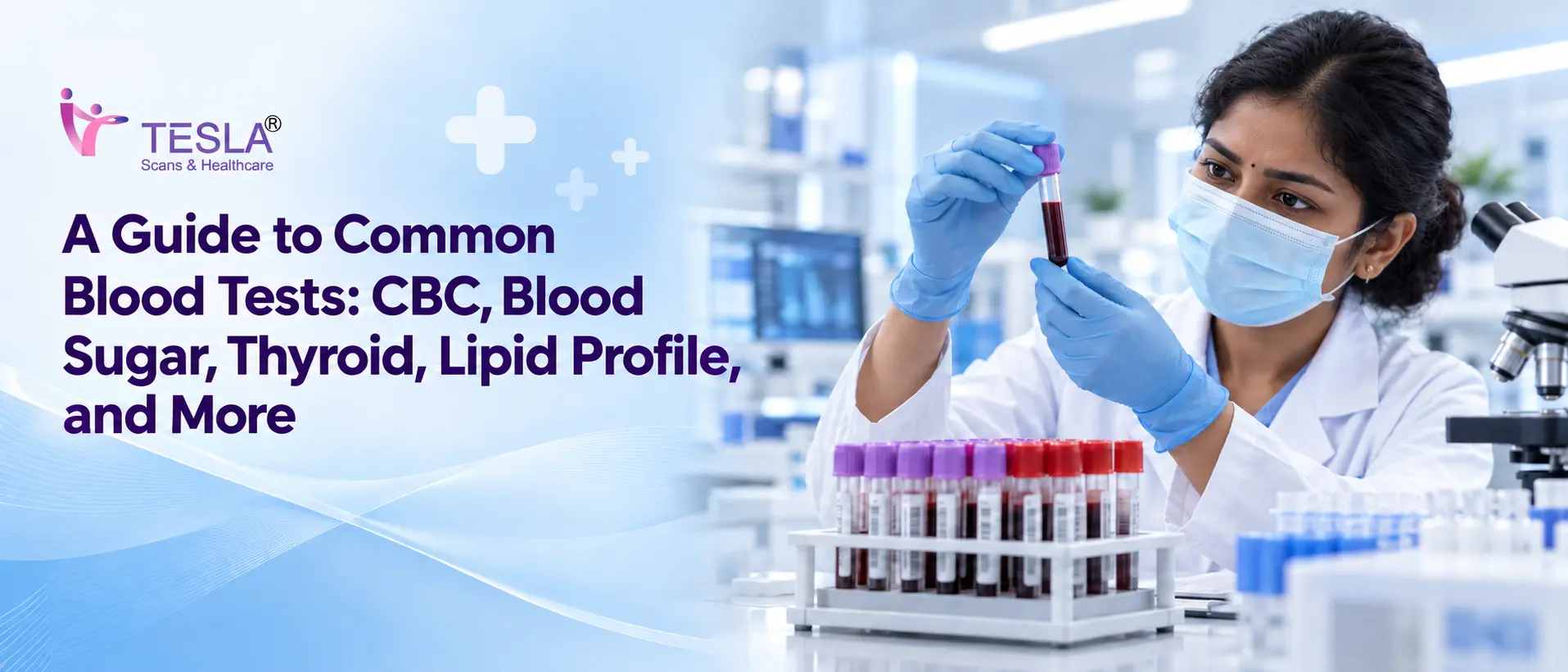
A Guide to Common Blood Tests: CBC, Blood Sugar, Thyroid, Lipid Profile, and More

A blood test can provide useful information about what is happening inside the body. It may be part of a routine health check, help investigate symptoms, or monitor a condition that is already being treated. The test requested depends on what the doctor needs to understand. For someone visiting a blood testing lab in Thrissur , knowing what common blood tests look for can make the process and the final report easier to understand.

Complete Blood Count (CBC)

A complete blood count, usually called a CBC, measures different cells and components in the blood, including red blood cells, white blood cells, platelets and haemoglobin. Red blood cells carry oxygen around the body, while white blood cells play a role in fighting infections. Platelets help with blood clotting, and haemoglobin is the protein in red blood cells responsible for carrying oxygen.

A CBC is commonly included in routine investigations and may also be advised when a doctor is checking for concerns such as anaemia, infection or changes in blood cell counts.

Blood Sugar Tests

Blood sugar tests measure the amount of glucose present in the blood, but different tests provide different types of information. A fasting blood sugar test is taken after an overnight fast, while a random blood sugar test can usually be done at any time. HbA1c, also known as glycated haemoglobin, reflects average blood sugar levels over roughly the previous two to three months.

These tests are commonly used when screening for diabetes, investigating possible blood sugar problems or monitoring people who already have diabetes. The test selected depends on what the doctor is trying to assess.

Thyroid Function Tests

The thyroid produces hormones that influence metabolism, energy use and several other body functions. Thyroid function tests measure these hormones to help determine whether the gland is working as expected.

TSH, or thyroid-stimulating hormone, is commonly used as the first test. T3 and T4 may also be measured when more information is needed. These investigations can help assess an underactive thyroid, known as hypothyroidism, or an overactive thyroid, known as hyperthyroidism. They are also used to monitor people receiving treatment for thyroid conditions.

Lipid Profile

A lipid profile measures several types of fat in the blood. The report commonly includes total cholesterol, LDL cholesterol, HDL cholesterol and triglycerides. LDL can contribute to plaque build-up in blood vessels when present at high levels, while HDL helps transport cholesterol towards the liver. Triglycerides are another type of fat found in the bloodstream.

A doctor may request a lipid profile during a routine health check or while assessing cardiovascular risk. The results can help build a broader picture of heart and blood-vessel health.

Other Blood Tests You May Encounter

Depending on your symptoms, medical history, or ongoing treatment, a doctor may recommend other blood tests as well.

  • Liver function tests: These measure substances such as liver enzymes and bilirubin to provide information about liver health and function.
  • Kidney function tests: Creatinine and eGFR are commonly used to assess how effectively the kidneys are filtering the blood.
  • Vitamin tests: Vitamin D and vitamin B12 may be checked when a deficiency is suspected or needs to be monitored.
  • Iron studies: Tests such as ferritin can provide information about the body's iron stores and may be useful when investigating possible iron deficiency or changes in haemoglobin.

Some of these investigations may also be included in broader health checkup packages in Thrissur, depending on the person's age, medical history and individual health needs.

What Should You Do Before a Blood Test?

Not every blood test requires fasting. A CBC and many thyroid tests generally do not require special preparation on their own. A fasting glucose test does require avoiding food for the instructed period, while HbA1c usually does not require fasting.

It is important to follow the instructions given for the specific tests you have been advised to take. When several tests are being done together, one investigation may require fasting even if the others do not. Prescribed medicines should not be stopped unless your doctor has specifically advised you to do so.

How Should You Read Your Blood Test Report?

A blood test report usually shows your result alongside a reference range. This range indicates values generally expected within a particular population, but a result outside the range does not automatically mean that you have a disease.

Laboratory values can be influenced by factors such as hydration, medicines and existing health conditions. Doctors therefore consider the report together with symptoms, medical history and other findings before deciding what a result means.

When choosing a pathology lab in Thrissur, clear and properly documented reports are useful, but the report itself is only one part of the overall clinical picture.

What Matters Most

Each blood test answers a different question. A CBC looks at blood cells, HbA1c gives a longer-term view of blood sugar, thyroid tests measure hormone levels, and a lipid profile looks at different fats in the blood.

People searching for the best diagnostic laboratory in Thrissur may also want to check whether the required tests are available and whether reports are provided clearly and reliably. Most importantly, the value of a blood test comes from using the result together with the reason it was ordered and the wider medical context.

If you are planning a blood test or health checkup, you can check test availability and preparation details with your nearest Tesla Scans & Healthcare centre in Chalakudy, Irinjalakuda, Kunnamkulam, Amballur, Kodungallur, Mala, and Muvattupuzha.

Frequently Asked Questions

  1. How often should I get routine blood tests?

    There is no fixed schedule that applies to everyone. The frequency depends on your age, medical history, existing health conditions, medicines, and individual risk factors. Some people may need regular monitoring, while others may only need testing when a doctor recommends it. Routine testing should be based on your healthcare needs rather than a fixed yearly schedule.

  2. Can I have a blood test while taking regular medicines?

    In many cases, yes. However, some medicines can affect certain blood test results; therefore , it is important to tell your doctor or the laboratory staff about the medicines and supplements you take. Do not stop or change a prescribed medicine just because you are going for a blood test unless your doctor specifically tells you to.

  3. Can stress, lack of sleep, or exercise affect blood test results?

    They can affect some laboratory values. Physical activity, stress, sleep patterns and other recent changes in your routine may influence certain results. This does not mean you need to avoid normal activities before every test. Follow the preparation instructions given for your specific investigation and let your healthcare provider know about anything that may be relevant.

  4. Can one blood test detect all health problems?

    No. Different blood tests provide different types of information. A CBC looks at blood cells, while a blood glucose test measures blood sugar and a thyroid test assesses hormone levels. Other investigations provide information about organs, cholesterol or nutritional status. Your doctor chooses tests based on your symptoms, medical history and the health concern being evaluated.

  5. What should I do if my blood test result is abnormal?

    Do not assume that an abnormal result means you have a disease. Laboratory reference ranges can vary, and individual results may be influenced by several factors. Your doctor will consider the result along with your symptoms, medical history and other findings. Depending on the situation, you may be asked to repeat the test or undergo further investigations.

This article is for educational purposes only and should not replace professional medical advice. Always consult a qualified healthcare professional for diagnosis and treatment recommendations.

About the Author

Dr Surej Subash - Physician at Tesla Scans & Healthcare, Thrissur

Dr Surej Subash

Physician | Tesla Scans & Healthcare, Thrissur

Dr Surej Subash is a physician associated with Tesla Scans & Healthcare, Thrissur. With a patient-focused approach to healthcare, he is committed to providing attentive clinical care and helping patients make informed decisions about their health and well-being.

Tesla Scans & Healthcare, Thrissur, Kerala